Your Code Has a Carbon Footprint — Here's What to Do About It
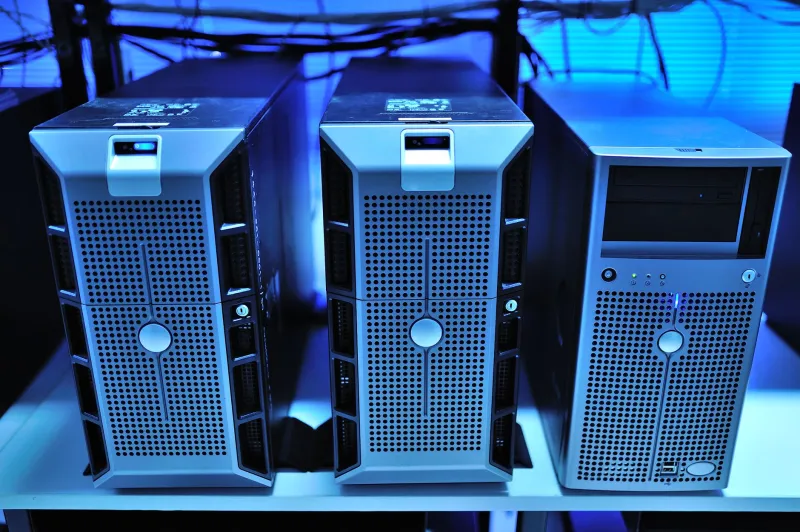
Let's start with a number that tends to land like a dropped laptop in a quiet room: data centers currently consume somewhere between 1-2% of global electricity — roughly on par with the entire airline industry. And that figure is climbing as AI workloads, video streaming, and cloud adoption accelerate.
Now here's the part that often gets skipped in developer conversations: a meaningful chunk of that energy consumption is directly shaped by the software decisions your team makes every single day. The cloud provider you chose. The database queries you haven't optimized since 2021. The autoscaling policy that keeps 40% of your compute sitting idle at 2 a.m.
This isn't a guilt trip. It's an opportunity. And increasingly, it's a business case.
The Invisible Emissions in Your Stack
Carbon emissions from software don't show up in your GitHub commits, but they're there. The Green Software Foundation breaks them down into two main buckets:
Operational emissions — the carbon produced by the electricity your running software consumes right now. This includes compute, storage, networking, and cooling.
Embodied emissions — the carbon baked into the hardware your software runs on, from manufacturing through end-of-life disposal. Cloud providers absorb most of this for their customers, but it's still part of the picture.
For most software teams, operational emissions are the lever they can actually pull. And the good news is that pulling it usually makes your software faster and cheaper too.
Cloud Provider Choice Matters More Than You Think
Not all cloud infrastructure is created equal when it comes to carbon impact. Where your cloud provider sources its electricity — and how efficiently it runs its data centers — varies enormously.
Amazon Web Services, Google Cloud, and Microsoft Azure have all made public commitments to renewable energy, but the details matter. Google Cloud has matched 100% of its global electricity consumption with renewable energy purchases since 2017 and is pushing toward operating on carbon-free energy 24/7 by 2030. Microsoft has committed to being carbon negative by 2030. AWS has made significant investments in renewable energy but has faced more scrutiny over the pace and transparency of its progress.
Beyond the headline pledges, the region you deploy in makes a real difference. Google's Carbon Footprint tool and AWS's Customer Carbon Footprint Tool both let you see emissions by region. Running your workloads in us-east-1 versus a region powered primarily by hydro or wind can result in dramatically different carbon outcomes — sometimes a 5-10x difference in emissions intensity.
If you haven't looked at these tools yet, that's a quick win sitting on the table.
The Efficiency Problem Nobody Wants to Talk About
Here's an uncomfortable truth for engineering teams: a lot of the carbon your infrastructure produces is waste. Not malicious waste — just the natural accumulation of shortcuts, deferred optimization, and infrastructure that was provisioned for peak load and never re-evaluated.
Some common culprits:
Over-provisioned Compute
The 2022 Flexera State of the Cloud report found that organizations estimate they waste 32% of their cloud spend. A significant portion of that waste translates directly into unnecessary energy consumption. Rightsizing your instances — matching compute to actual workload rather than worst-case assumptions — is one of the fastest paths to both cost savings and lower emissions.
Inefficient Database Queries
A poorly written SQL query that does a full table scan instead of using an index isn't just slow — it's burning CPU cycles that translate into real energy draw. Database optimization is one of the most underrated environmental wins available to development teams. Tools like pganalyze for PostgreSQL or Datadog's database monitoring can surface the worst offenders quickly.
Always-On Architecture
Not everything needs to run 24/7. Serverless and event-driven architectures — AWS Lambda, Google Cloud Functions, Azure Functions — spin up compute only when it's actually needed. For workloads that aren't continuous, this shift can cut energy consumption by 80% or more compared to a persistently running server.
Data Transfer and Storage Bloat
Every megabyte transferred across a network consumes energy. Bloated API responses, uncompressed assets, and redundant data replication all add up. Auditing your data transfer patterns — and aggressively pruning stale data from storage — is low-hanging fruit that most teams ignore until the AWS bill forces the conversation.
Building Sustainability Into the Development Lifecycle
The most effective organizations don't treat sustainability as a post-deployment audit. They bake it into their engineering culture the same way they've baked in security or performance.
A few practical ways to do that:
Add a carbon metric to your architecture reviews. Tools like the Cloud Carbon Footprint open-source project can integrate into your existing dashboards. When teams can see emissions data alongside cost and latency, it changes the conversation.
Set efficiency KPIs alongside performance KPIs. If your team tracks p99 latency and error rates, consider adding "carbon per transaction" or "energy per API call" as metrics worth watching. What gets measured gets improved.
Leverage carbon-aware scheduling. The electricity grid's carbon intensity fluctuates throughout the day depending on how much renewable generation is available. Tools like WattTime's API or Microsoft's carbon-aware SDK allow workloads that aren't time-sensitive — batch jobs, model training, data exports — to be scheduled when the grid is cleanest.
Choose efficient languages and frameworks deliberately. A 2017 study from researchers in Portugal found that energy consumption varies wildly across programming languages — C and Rust consume dramatically less energy than Python or Ruby for equivalent computational tasks. That doesn't mean you should rewrite everything in Rust tomorrow, but it's worth factoring into decisions about which tools to reach for when performance and efficiency matter.
The Business Case Is Getting Stronger
If the environmental argument doesn't move the needle in your organization's budget conversations, the business case increasingly will.
Enterprise customers — especially those with their own sustainability commitments — are beginning to ask vendors about Scope 3 emissions, which includes the emissions from software and services in their supply chain. The SEC's proposed climate disclosure rules, though still evolving, are pushing public companies toward greater transparency about emissions across their operations.
Meanwhile, the efficiency gains from greener practices almost always translate directly to lower cloud bills. Rightsizing compute, optimizing queries, and eliminating waste aren't sacrifices — they're engineering discipline that pays dividends.
Start Where You Are
You don't need a dedicated sustainability team or a company-wide initiative to start making a difference. Pick one thing from this list and do it this quarter:
- Enable your cloud provider's carbon footprint tool and check which of your regions has the highest emissions intensity
- Run a compute rightsizing report and identify your top five over-provisioned instances
- Pull your slowest database queries from the last 30 days and optimize the top three
- Evaluate whether any of your always-on services could move to a serverless model
At RibbitSol, we think the best software doesn't just leap ahead in performance — it lands lightly. A smaller footprint and a faster product aren't opposing goals. More often than not, they're the same goal wearing different hats.
Your stack is already talking. It might be time to listen to what it's saying about the planet.