Building for Nobody: How Engineering Teams End Up Solving Problems That Don't Exist
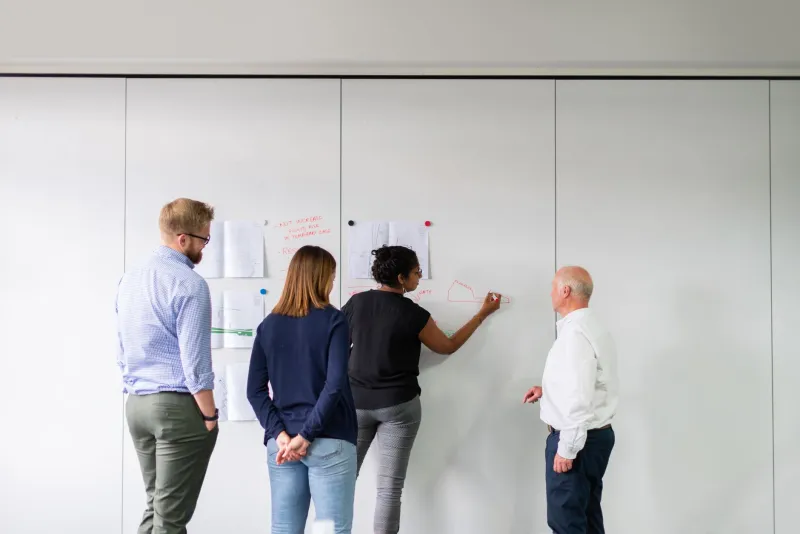
Here's a scenario that probably sounds familiar. A senior engineer spots what looks like an obvious gap in your product. They're sharp, motivated, and they've got a solution half-sketched out before the next sprint even kicks off. Three weeks later, they demo something genuinely impressive — and the product manager has to gently explain that no user has ever asked for this, not once.
Everyone's a little deflated. The work wasn't bad. The engineering was solid. But it landed in a void.
This is what we'd call the classic leap-before-you-look problem. And it's way more common than engineering leaders like to admit.
The Isolation Trap
Most engineering teams don't set out to build irrelevant features. The disconnect usually happens gradually, quietly — like a frog drifting further and further from the bank without realizing it.
When engineers spend the majority of their time heads-down in tickets, pull requests, and architecture decisions, they naturally start solving the problems they can see — which are almost always technical problems. Edge cases in the codebase. Performance inefficiencies. Architectural inconsistencies that make their own lives harder. These are real issues worth addressing, but they exist in a different universe from the things your actual users are struggling with on a Tuesday afternoon.
The trouble is, without regular exposure to user feedback, customer conversations, or cross-functional input, engineers have no real way to calibrate. They're making judgment calls about priority and value based on incomplete information. And since they're talented people, they'll make confident judgment calls — which can be even more dangerous.
When Feedback Loops Go Missing
A lot of teams think they have feedback loops because they hold sprint reviews or send out the occasional NPS survey. But there's a big difference between having a feedback mechanism and actually letting that feedback shape what gets built.
Real feedback loops are messy and ongoing. They involve engineers sitting in on customer calls, reading support tickets without a filter, and talking directly to the salespeople who hear objections every single day. They mean product managers aren't just handing down requirements — they're explaining the why behind them, and engineers are pushing back with informed questions.
Without that kind of connective tissue, you end up with a team that's technically excellent but organizationally isolated. They're building on assumptions that made sense six months ago and haven't been updated since.
The result? Features that solve theoretical problems. Elegant abstractions nobody uses. Performance improvements that shave milliseconds off a workflow users abandoned last quarter.
The Cost Is Bigger Than You Think
Let's talk numbers for a second, because this isn't just a philosophical issue.
Every sprint cycle spent building the wrong thing is a sprint cycle that didn't go toward something with actual business value. In a mid-sized engineering org, that's not just wasted developer hours — it's delayed revenue, slower response to competitive pressure, and compounding opportunity cost. You're also burning goodwill. Engineers who pour energy into something that gets shelved don't just shrug it off. They start to feel like their judgment isn't trusted, or that the organization doesn't have its priorities straight. That's a retention problem waiting to happen.
And then there's the maintenance tail. Features that get built but don't gain traction don't just disappear — they hang around in the codebase, accumulating technical debt and creating cognitive overhead for every engineer who has to work around them.
What Alignment Actually Looks Like
The fix here isn't micromanagement. It's not locking engineers out of architectural decisions or turning every ticket into a committee process. The goal is calibration, not control.
A few things that actually move the needle:
Rotate engineers into customer-facing conversations. Even one support call a month can recalibrate how an engineer thinks about user experience. You don't need everyone doing this all the time — just enough exposure to make abstract users feel concrete.
Share the "why" behind product priorities. When engineers understand the business context driving a feature request, they make better micro-decisions throughout the implementation. They also push back more effectively when something doesn't add up — which is exactly what you want.
Build in explicit validation checkpoints before full builds. Before a team commits to a multi-sprint effort, there should be a lightweight moment of reckoning: who asked for this, and how do we know? A one-pager, a quick user interview, a look at support data — something that grounds the work in evidence.
Create space for engineers to kill their own ideas. This is cultural, and it's hard. But teams that normalize saying "actually, I'm not sure this is the right thing to build" before they're three weeks in will always outperform teams where admitting uncertainty feels like weakness.
Staying Connected to the Shore
The best engineering teams aren't just technically skilled — they're organizationally aware. They understand that great software isn't defined by how clever the implementation is, but by how well it solves a real problem for a real person.
That kind of awareness doesn't happen automatically. It has to be designed into how teams work: through the rituals they keep, the conversations they're included in, and the habits leadership models at every level.
At RibbitSol, we think a lot about what it means to build software that actually moves the needle. And the honest answer is that most teams don't have a talent problem or a technology problem — they have a connection problem. The engineers are capable. The users have real needs. The gap is just the space between them that nobody's bothering to close.
Close that gap, and you'd be surprised how quickly the right solutions start to surface.